Self-Hosted AI Code Review: Security, Cost & Control
Why teams keep source code on their own infrastructure — the security, compliance, and cost case for self-hosted and single-tenant AI code review, and how to run it without a multi-week DevOps project.
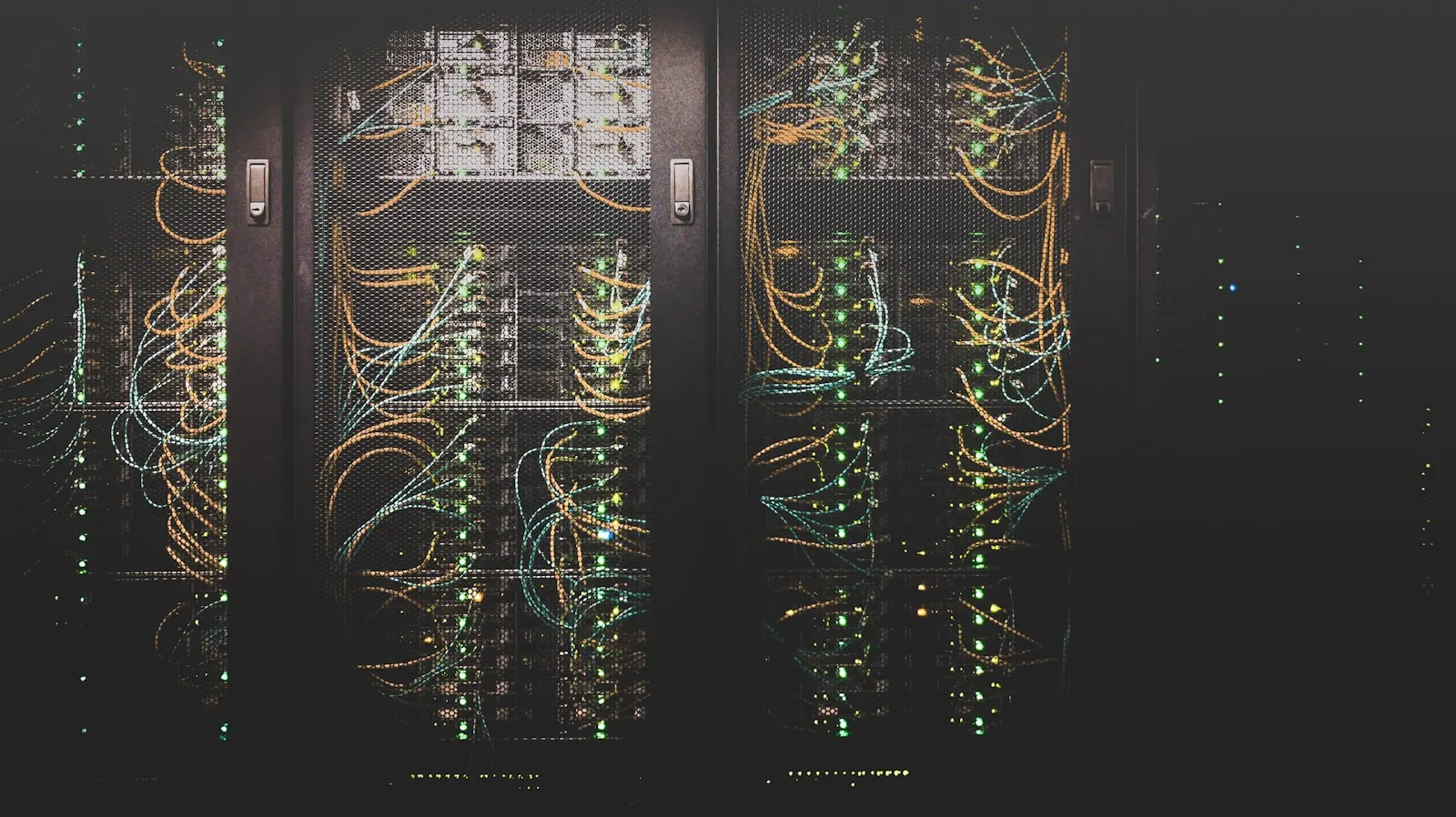
Every AI code review tool has to answer one question before it reads a single line of your code: where does that code go? For a growing number of engineering teams — especially in regulated industries, or anywhere source code is the crown jewels — the only acceptable answer is “it stays on our infrastructure.” That is what self-hosted AI code review delivers.
This guide covers what self-hosted (and single-tenant) AI code review actually means, the security, compliance, and cost advantages that make teams choose it, the trade-offs to plan for, and how PURA runs a self-hosted deployment in your own AWS, GCP, Azure, Hetzner, DigitalOcean, or on-premise environment — without the multi-week DevOps project that open-source self-hosting usually demands.
What “self-hosted AI code review” means
Self-hosted AI code review runs the review platform on infrastructure you control instead of a vendor's shared, multi-tenant cloud. Your repositories, pull request diffs, and review history stay inside your network boundary. Deployment usually takes one of a few shapes, from most-shared to most-isolated:
- Multi-tenant SaaS. The vendor hosts everything; your data shares infrastructure with every other customer. Fastest to adopt, least control.
- Single-tenant / dedicated instance. A deployment isolated to your organization alone — your own database, your own boundary — managed for you.
- Self-hosted in your cloud (VPC / BYOC). The platform runs inside your own AWS, GCP, Azure, Hetzner, or DigitalOcean account. Code never leaves your network.
- On-premise / air-gapped. Fully inside your data center, optionally with no outbound internet at all — the strictest data-residency posture there is.
“Self-hosted” colloquially covers the bottom three: any deployment where your code is processed on infrastructure you own or exclusively occupy. PURA offers single-tenant and self-hosted deployment for Enterprise customers — see the self-hosted deployment docs for supported clouds and setup.
The security case: your code never leaves your network
The strongest argument for self-hosting is simple: you cannot leak what you never send. Multi-tenant SaaS asks you to trust a vendor's isolation, their access controls, and their breach response for the most sensitive asset you have. A self-hosted or single-tenant deployment shrinks that trust surface to your own network.
- No shared infrastructure. Your review data is not co-located with other tenants, so an isolation bug in someone else's account can't become your incident.
- Data residency by construction. If the deployment lives in
eu-central-1or your Frankfurt rack, your code is provably processed there — no “we may process content outside your region” asterisk. - Your keys, your network egress. You decide which model providers reviews can reach, and every outbound call originates from infrastructure your security team already monitors.
Self-hosting doesn't replace good product security — it stacks on top of it. PURA processes code transiently and never retains it, redacts detected secrets before anything reaches a model provider, and runs reviews on your own API keys. A self-hosted deployment adds network-level isolation to those controls, rather than substituting for them.
The compliance case: GDPR, SOC 2, ISO 27001, and data residency
For regulated teams, self-hosting is frequently less about preference and more about what procurement and auditors will actually approve. Sending proprietary or personal data through third-party infrastructure triggers a cascade of obligations; keeping it in-house removes most of them.
- GDPR & data residency. A European organization generally cannot route personal data through non-EU infrastructure without a lawful transfer mechanism. Self-hosting in an EU region sidesteps that entirely — the data never crosses a border.
- SOC 2 & ISO 27001 scope. When code stays inside your environment, it falls under controls you already run and audit, which shortens vendor risk reviews. PURA builds to an ISMS aligned with SOC 2 and ISO/IEC 27001, and a single-tenant deployment maps cleanly onto your own attestations.
- Data sovereignty & sensitive IP. Defense, finance, healthcare, and any team with classified or export-controlled code often cannot use shared SaaS at all. Self-hosted or air-gapped deployment is the only path that clears review.
PURA's multi-tenant SaaS already stores customer data encrypted at rest in the EU (Germany); self-hosting extends that guarantee to wherever you need the data to live. See the security & trust center for the full control set.
The cost case: flat fee plus your own keys beats per-seat
There's a myth that self-hosting is always more expensive. It comes from open-source tools that make you run your own GPUs and babysit model infrastructure. That cost is real — 8GB+ of VRAM per model, multi-week deployments, and ongoing maintenance — but it is a property of DIY self-hosting, not self-hosting itself.
PURA is built to avoid that trap on both axes:
- No per-seat billing. Per-developer SaaS pricing grows with headcount regardless of how much you actually review — at 50 engineers, a few dollars per seat is thousands per month before anyone checks whether the reviews are good. PURA charges a flat platform fee metered by reviews, with unlimited contributors.
- Bring-your-own-key inference at cost. Reviews run on your own OpenAI, Anthropic, or Google keys at provider rates with zero markup, and any enterprise or committed-use discount you already have carries straight over.
- No GPU tax. PURA orchestrates the review and routes to the models you choose — hosted or private — so you don't stand up and maintain your own inference cluster just to keep code in-house.
- Hard budget caps. Daily, weekly, and monthly per-developer, per-repo, and per-provider budgets keep a self-hosted deployment's spend as predictable as its data boundary.
Self-hosted vs. SaaS AI code review at a glance
| Dimension | Multi-tenant SaaS | Self-hosted / single-tenant (PURA Enterprise) |
|---|---|---|
| Where code is processed | Vendor's shared cloud | Your cloud account, VPC, or data center |
| Data residency | Vendor's regions | Any region or on-prem you choose |
| Tenant isolation | Logical, shared infrastructure | Dedicated — yours alone |
| Air-gapped option | No | Yes, on request |
| Model choice | Whatever the vendor runs | Your keys, any supported provider (BYOK) |
| Pricing | Often per-seat | Flat platform fee + inference at cost |
| Time to value | Minutes | A guided deployment, not a DIY project |
The trade-offs to plan for
Self-hosting is the right call for many teams, but it is an honest trade, not a free lunch. Weigh these before you commit:
- Operational ownership. A deployment in your environment means your team owns its uptime and upgrades. PURA's managed single-tenant option keeps that burden minimal, but it never fully disappears the way pure SaaS does.
- Provider connectivity. Unless you run fully private models, reviews still call your chosen LLM provider — that egress is under your control, but it exists. Fully air-gapped setups trade some model choice for total isolation.
- Right-sizing. Single-tenant SaaS gives most of the isolation benefit with far less operational load than on-prem. Many teams land there rather than going fully air-gapped.
How PURA self-hosts: your cloud, your repos, your rules
PURA deploys single-tenant on AWS, Google Cloud, Microsoft Azure, Hetzner, and DigitalOcean, and connects to GitHub, GitLab, and Azure Repos. Not on that list? PURA's team will tailor a deployment to your environment. The self-hosted deployment docs list the current support matrix and setup steps.
A typical Enterprise self-hosted rollout looks like this:
- Scope the deployment. Talk to the PURA team about your cloud, region, SCM, and compliance requirements (GDPR region, air-gap, SSO, retention).
- Provision in your environment. PURA is deployed into your account or data center, isolated to your organization, wired to your GitHub, GitLab, or Azure Repos.
- Connect your keys and models. Add your OpenAI, Anthropic, or Google keys and point routing rules at the right model per PR.
- Set budgets and go. Configure per-team and per-repo caps, then comment
/pura reviewon a pull request. Every review now runs inside your boundary, on your keys, within your budgets.
The bottom line
AI code review is metered compute pointed at your most valuable IP. For teams where that IP can't leave the building — or the region — self-hosting isn't a luxury, it's the entry ticket. The good news is you no longer have to choose between control and convenience: a single-tenant or self-hosted PURA deployment keeps code inside your network, satisfies data-residency and compliance requirements, runs on your own keys at provider cost, and skips the GPU-and-DevOps overhead of DIY tools.
If source-code security, data residency, or procurement is what's standing between your team and AI code review, that's exactly the gap self-hosted PURA closes. Talk to sales to scope a deployment, or book a demo.
Frequently asked questions
- What is self-hosted AI code review?
- Self-hosted AI code review runs the review tool on infrastructure you control — your own cloud account (AWS, GCP, Azure, Hetzner, DigitalOcean) or on-premise servers — instead of a vendor’s multi-tenant SaaS. Your source code and pull request data stay inside your network, giving you full data residency, tenant isolation, and control over which model reads your code. PURA offers self-hosted, single-tenant deployment for Enterprise customers on request.
- What are the advantages of self-hosting AI code review?
- The main advantages are security (source code never leaves your network), compliance and data residency (you satisfy GDPR, SOC 2, and ISO 27001 requirements by keeping data in your region and infrastructure), control (you choose the deployment, the models, and the update cadence), and predictable cost (a flat platform fee plus bring-your-own-key inference at provider rates, with no per-seat billing and no markup). For regulated teams and those handling sensitive IP, self-hosting is often the only deployment that clears procurement.
- Is self-hosted AI code review more secure than SaaS?
- It reduces your external attack surface: with a single-tenant or on-prem deployment, your code is processed inside your own network boundary rather than sent to shared vendor infrastructure. That makes data residency guarantees straightforward and simplifies audits. PURA also minimizes exposure in every deployment — code is processed transiently and not retained, detected secrets are redacted before anything reaches a model provider, and reviews run on your own API keys. Self-hosting adds network-level isolation on top of those controls.
- Which cloud providers can PURA be self-hosted on?
- PURA can be deployed single-tenant on AWS, Google Cloud (GCP), Microsoft Azure, Hetzner, and DigitalOcean, and connects to GitHub, GitLab, and Azure Repos. If your stack is not on that list, PURA’s team will tailor a deployment to your environment. See the self-hosted deployment docs for the current list and setup steps.
- Does self-hosting cost more than SaaS AI code review?
- Not necessarily. Per-seat SaaS tools grow more expensive with headcount regardless of how much reviewing you actually do. PURA charges a flat platform fee metered by reviews, and inference runs on your own OpenAI, Anthropic, or Google keys at provider rates with zero markup — so a self-hosted PURA deployment is usually cheaper than a per-seat tool at team scale, while giving you data control the SaaS tool cannot. You avoid the GPU and DevOps overhead of open-source self-hosted tools because PURA orchestrates the review and routes to hosted or private models you choose.
- Can PURA run in an air-gapped or fully private environment?
- Yes — for Enterprise deployments PURA can run inside your VPC or private network with code never leaving your infrastructure. Air-gapped and strict data-residency setups are supported on request; contact sales to scope a deployment for your compliance requirements.
Ready to run PURA on your own infrastructure?
Scope a self-hosted or single-tenant deployment for your cloud, region, and compliance requirements — our team will tailor it to your environment.
Talk to sales